From the Printing Press to AI: A Pattern Writers Can Trust
Every generation of writers faces a technology that threatens to make them obsolete. The panic is always the same. So is the adaptation. Here is the full history -- and why this time might be genuinely different.
Every generation of writers has faced a technology that, according to the people who lived through it, was going to destroy writing forever. Not damage it. Not change it. Destroy it. The language of existential threat is always the same. So is the cycle that follows: panic, resistance, grudging adoption, and eventually a new definition of what "real writing" means.
I've spent months reading the primary sources -- the letters, editorials, trade journal arguments, and education board minutes from each of these transitions -- and the parallels to the current AI panic are so exact that they're almost eerie. But the history also reveals something the simple "people always panic and it always works out" narrative misses: sometimes the fears were justified. People did lose their livelihoods. Skills were genuinely lost. The adaptation wasn't painless, and pretending otherwise doesn't help anyone navigate what's happening now.
Here are the episodes that matter.
The Printing Press and the Scribes Who Lost Everything
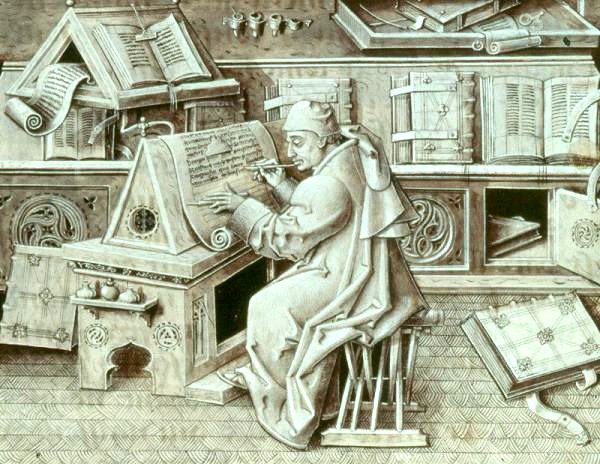
In 1492, the Abbot Johannes Trithemius wrote De Laude Scriptorum Manualium -- "In Praise of Scribes." His argument was specific and passionate: the printing press was destroying the careful, contemplative discipline of hand-copying manuscripts. Scribal work was spiritual practice, he said. Each hand-copied letter was an act of devotion. The press reduced sacred words to a commodity stamped out by mechanics who couldn't read Latin.
And Trithemius? He had his treatise printed. He wanted a wide audience for his argument against wide audiences. He used the very technology he was condemning because it was, in fact, better at spreading ideas. He knew this. The contradiction ate at him, and his later writings tried to reconcile it without much success.
Trithemius wasn't a fool. He was seeing clearly that something real was about to be lost. The Benedictine monks who ran Europe's scriptoria weren't just copyists -- they were editors, fact-checkers, translators, and preservers of knowledge. Within two generations of Gutenberg, the scribal profession was functionally extinct. Thousands of highly skilled workers lost their livelihoods. That part of the story is usually glossed over in the triumphalist narrative about printing democratizing knowledge.
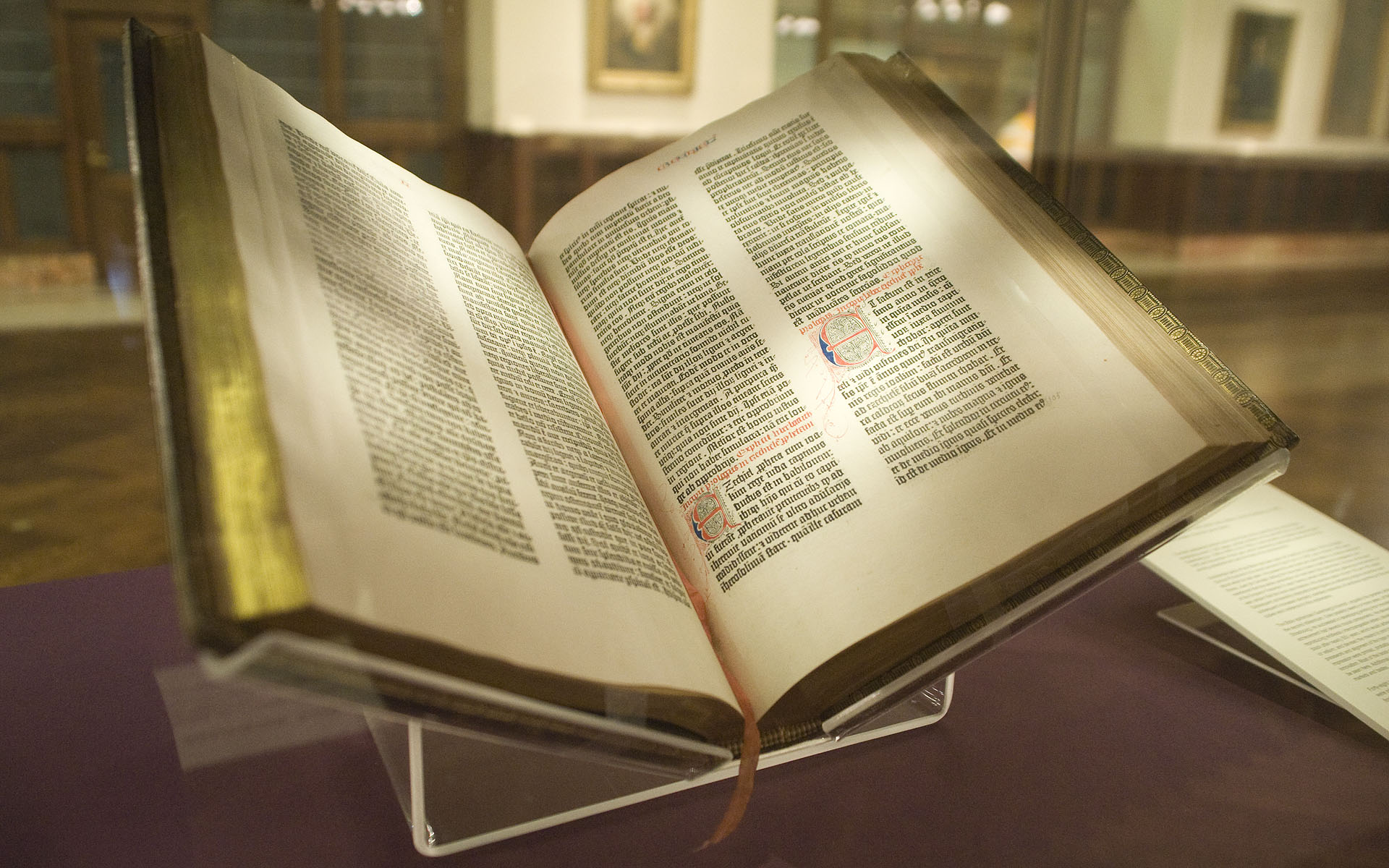
But the monks who adapted -- who became typesetters, proofreaders, editors, and eventually publishers -- discovered that the press didn't just reproduce manuscripts faster. It created forms of writing that hadn't existed before. The pamphlet, the broadsheet, the serial, the novel as a popular form. Martin Luther's 95 Theses spread across Germany in two weeks, something physically impossible in the scribal era. The Venetian scholar Niccolo Perotti complained to the Pope in 1471 that printing was flooding the market with error-ridden trash. He wasn't wrong -- early printed books were often sloppier than manuscripts. But his proposed solution, a papal board of censors to approve all books before printing, reveals the same instinct we see today: if we can't stop the technology, maybe we can gatekeep it.
The printing press killed the scribal profession. It also created modern literature. Both of those things are true.
The Typewriter and the Death of Personal Style
Build evidence before the accusation
Start a voice baseline and see what a defensible report looks like. It takes minutes now and saves weeks later.
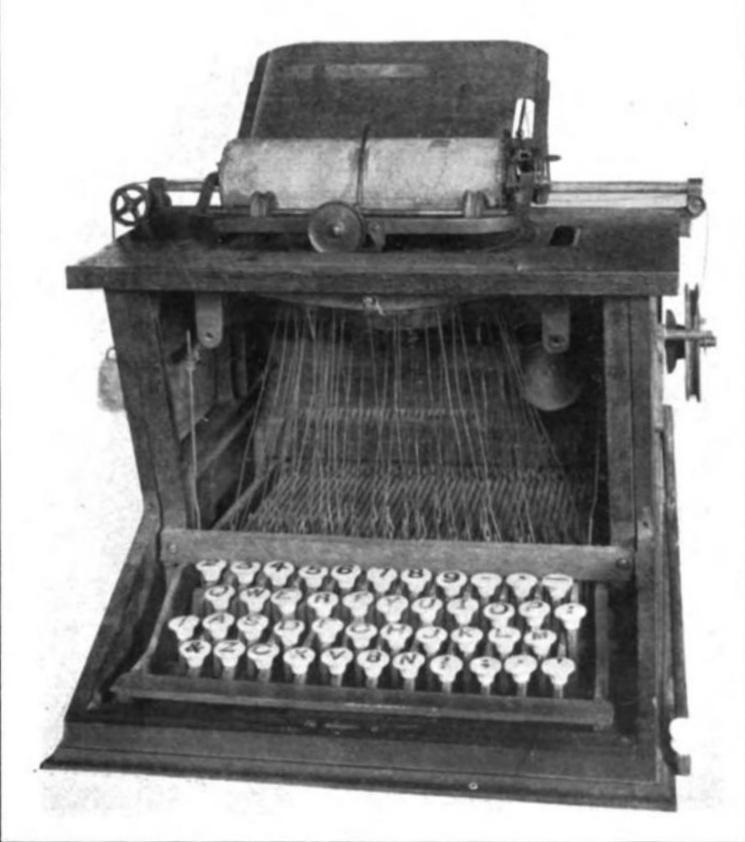
When the Remington No. 1 entered commercial production in 1874, the resistance came from an unexpected direction. It wasn't just that writers feared mechanical writing would strip personality from prose -- it was that the entire culture of handwriting felt threatened.
Professional penmen were a real occupation in the 19th century, with their own trade journals, conventions, and professional associations. The Penman's Art Journal ran editorials through the 1880s and 1890s warning that the typewriter would kill the personal letter and with it the art of expressing character through handwriting. "The typewriter is to the pen what the sewing machine is to the needle," one editorial argued. "It does the work, but it removes the hand, and with the hand, the heart."
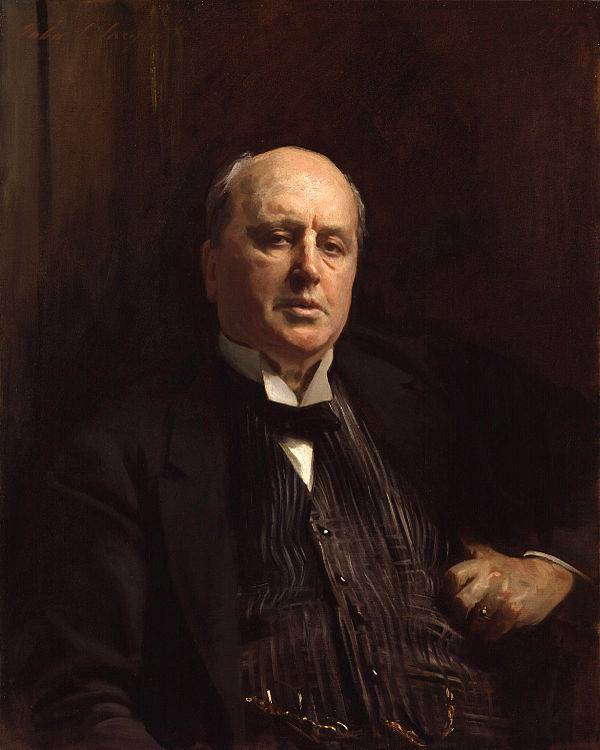
The novelist Henry James was initially skeptical of the device. But after hiring a typist named William MacAlpine in 1897, James began dictating his novels rather than writing them in longhand. The effect on his prose was measurable: his late style -- the famously elaborate, parenthetical, clause-within-clause sentences of The Ambassadors and The Golden Bowl -- emerged partly because dictation freed him from the physical constraints of pen-and-ink composition. His sentences became longer, more sinuous, more speech-like. The typewriter didn't erase his voice. It changed it into something more distinctly his.
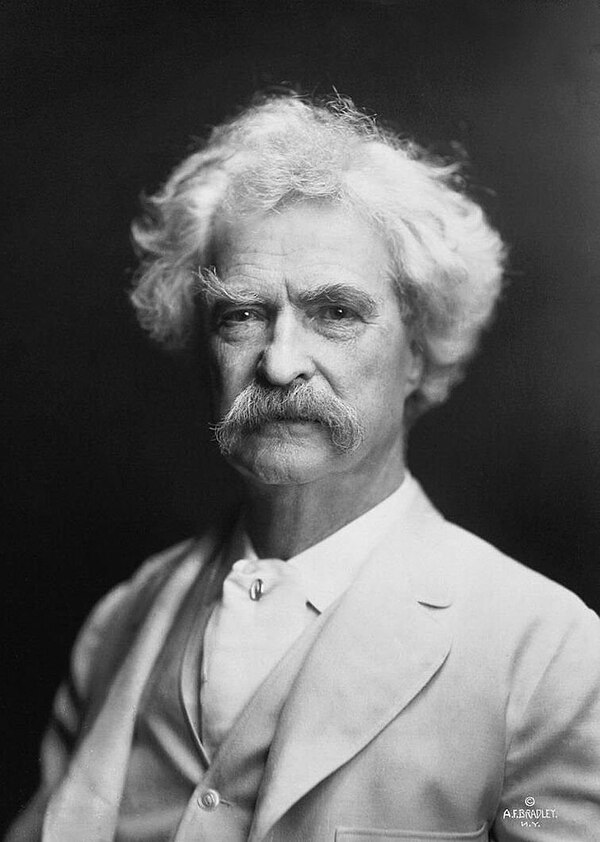
Mark Twain submitted Life on the Mississippi as a typewritten manuscript in 1883, probably the first major literary work to arrive at a publisher that way. His publisher didn't quite know how to handle it.
The fear that typed text was "cold" and "impersonal" persisted well into the 20th century. As late as the 1940s, etiquette guides advised that personal letters should always be handwritten, because a typed personal letter was considered rude -- it implied the recipient wasn't worth the effort of handwriting.
What actually happened: handwritten correspondence did decline. Something genuine was lost. But the typewriter made writing accessible to people who struggled with penmanship, including many people with physical disabilities who had been effectively locked out of written communication. The barrier to producing clear, readable text dropped dramatically. More people wrote more often. The skill that mattered -- having something worth saying -- survived. The skill that became obsolete -- beautiful handwriting -- turned out not to be the point.
Word Processors and the "Anyone Can Write Now" Panic
The arrival of affordable word processors in the early 1980s triggered a panic that's often forgotten because it was resolved so quickly. The specific fear: if anyone could produce professional-looking documents, the distinction between skilled and unskilled writers would collapse.
The concern had a surface plausibility. Before word processors, a badly written report at least looked like what it was -- typed on a typewriter with visible corrections, liquid paper, and uneven margins. A polished document required either skill or a secretary. Word processors made every document look clean, and critics argued this would create a false equivalence between good writing and bad writing dressed up in nice formatting.
The education critic Neil Postman captured the anxiety in Technopoly (1992): technology, he argued, was creating the illusion that ease of production equaled quality of output. If anyone could produce professional-looking text, the thinking went, the public would lose the ability to distinguish good writing from bad.
Postman was right about the diagnosis and wrong about the trajectory. Word processors didn't make everyone a good writer. But they did remove a barrier that had nothing to do with writing quality. A student with terrible handwriting could finally be evaluated on their ideas rather than their penmanship. A professional who couldn't afford a secretary could produce polished proposals. The technology separated the craft of writing from the mechanics of document production, and it turned out those were always different things.
Spell-Check and Grammar Tools: The "Crutches That Would Destroy Literacy"
When spell-checking software became standard in word processors during the late 1980s and early 1990s, English teachers sounded an alarm that could be transplanted word-for-word into the AI debate.
The arguments were everywhere in the early 1990s. Teachers wrote letters to professional journals warning that students would never learn to spell if computers did it for them. The fear of "electronic crutches" was a fixture of education conferences and faculty lounge debates. By 2004, the same concern had expanded to grammar-checkers: Microsoft Word's green squiggly underline was, according to a widely circulated column in The Times Educational Supplement, "doing for grammar what the calculator did for arithmetic -- removing the need to understand it."
The data on what actually happened is mixed, which is the honest answer. Studies did show that students who relied heavily on spell-checkers had weaker spelling skills in isolation. But those same students produced documents with fewer errors, communicated more effectively in professional contexts, and -- this is the part that rarely gets mentioned -- spent more time on higher-order writing concerns like argument structure and evidence quality because they spent less time worrying about whether "necessary" had one 's' or two.
The pattern is the same pattern every time: the technology automated a mechanical skill, critics argued the mechanical skill was inseparable from the deeper skill, and the deeper skill turned out to be more robust than expected.
The Internet and Blogging: "The Death of Professional Writing"
When blogging platforms exploded in the early 2000s, the literary establishment had a genuine crisis of identity. Anybody with an internet connection could now publish to a global audience. No gatekeepers. No editors. No quality control.
Andrew Keen's 2007 book The Cult of the Amateur gave the backlash its manifesto. Keen argued that the internet was drowning professional expertise in a sea of amateur content, and that the audience couldn't tell the difference -- or worse, didn't care.
The parallels to AI slop are direct. The internet flooded the information ecosystem with low-quality writing. Content farms like Demand Media (remember eHow?) paid writers $15 per article to produce SEO-optimized garbage on every conceivable topic. The phrase "content is king" became the mantra of an industry that cared about volume, not quality. Freelance writing rates came under pressure as clients asked why they should pay $500 for an article when they could get one for $15.
Turnitin launched in 1998, specifically to catch internet-sourced plagiarism -- copy-paste from the web had made academic dishonesty trivially easy. The tool worked well for that purpose because it was comparing text against a known corpus, a fundamentally different and more reliable approach than trying to statistically guess the origin of text.
But here's what the "death of professional writing" narrative missed: the internet also created the conditions for the most diverse, accessible publishing ecosystem in human history. Writers who could never have found a publisher -- because their audience was too niche, their perspective too unconventional, their geography too remote -- built readerships from nothing. The barrier wasn't gone; it had moved. The old barrier was access to printing and distribution. The new barrier was the ability to produce work worth reading when millions of other people were producing work too.
That's the same shift happening now with AI. The barrier to producing text has collapsed. The barrier to producing text that matters hasn't moved at all.
AI: The Current Chapter
And now we're here. The pattern is unmistakable: a new technology arrives, it automates something previously done by human skill, people who've built their livelihoods on that skill panic, critics make arguments that are partially right and partially wrong, the technology wins anyway, and the definition of "real writing" adjusts.
But I want to be honest about something the historical parallel doesn't quite capture: this time might be genuinely different in at least one respect.
Every previous technology automated a mechanical aspect of writing. The press automated copying. The typewriter automated legibility. Word processors automated formatting. Spell-check automated orthography. In each case, the cognitive work -- the thinking, the argument-building, the voice -- remained entirely human.
AI is the first technology that automates cognitive work itself. It doesn't just format your sentences; it generates them. It doesn't just check your argument; it produces arguments. That's a qualitatively different kind of automation, and pretending it's "just another tool like the printing press" is dishonest.
At the same time, the historical pattern does tell us something reliable: the human capacity that matters most is always more resilient than the panickers believe. Scribes thought copying was sacred; the sacred part turned out to be preserving knowledge, and the press did that better. Penmen thought handwriting was character; character turned out to live in the ideas, not the letterforms. Teachers thought spelling was foundational; the foundation turned out to be communication, and spell-check served that just fine.
What's the equivalent for AI? My best guess: the capacity that won't be automated is the ability to have genuine expertise, take positions based on lived experience, maintain a consistent and identifiable voice, and produce work that could only have come from a specific person who knows specific things. In other words, the capacity that matters is authorship in the deepest sense -- not the act of typing words, but the act of being the person behind them.
The Lesson That Repeats
Every technology in this story followed the same arc:
The technology arrives, and some fears are legitimate. Printing did spread errors. The internet did enable plagiarism. AI slop is real, and it is harming working writers right now.
Some people and professions are genuinely damaged. Scribes lost their livelihoods permanently. Penmanship teachers became irrelevant. Some freelance writers are losing income to AI-generated content today, and some of those losses won't be recovered.
The technology enables new forms nobody predicted. The press created the pamphlet, the broadsheet, and the popular novel. The internet created blogging, social journalism, and niche publishing. We don't yet know what forms AI will enable, and anyone who claims to is guessing.
The definition of "the real skill" gets refined. Each technology strips away a mechanical layer and forces a reckoning with what the human contribution actually is. That reckoning is uncomfortable, but it consistently reveals that the core of writing -- thinking clearly, knowing things, having a perspective -- is more durable than the mechanical layer that got stripped away.
The writers who thrive adapt without abandoning what matters. Henry James didn't stop being Henry James when he started dictating. He evolved. The question for every writer facing every new technology has always been the same: what part of what I do is genuinely mine, and what part was just the mechanics of the era I happened to work in?
If you can answer that question honestly, you'll navigate this transition the way writers have navigated every transition for six hundred years. Not without loss. Not without adaptation. But with your work intact.
Explore the difference between AI slop and AI-assisted writing, and learn how voice fingerprint analysis is making authorship provable.
Get the Proof Stack Checklist
Download the one-page checklist that shows exactly what to save, when to save it, and how to assemble a defensible authorship packet.
We send one checklist and occasional updates. No spam.
Ready to protect your writing?
Use WritersLogic to analyze your writing, document your process, and generate defensible authenticity reports.