Finding Your Writing Voice: Why It Matters More Than Ever and How to Actually Develop It
Your writing voice isn't something you find in a craft book. It's the thing that remains after you strip away everything you learned to do. Here's how to discover it, strengthen it, and understand why it's the most valuable thing you own as a writer.
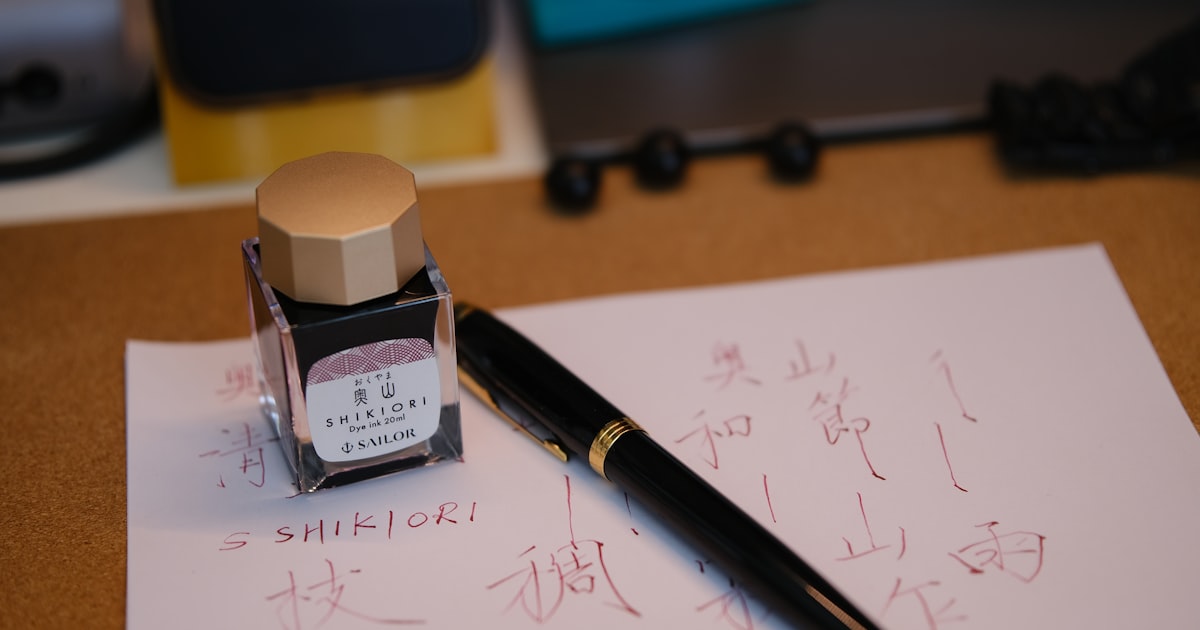
I've been thinking about what writing voice actually is for a long time, and I'm not sure the standard definitions get it right.
The craft books say voice is your "unique style" -- the combination of rhythm, word choice, and tone that makes your writing recognizably yours. That's technically accurate in the same way that saying music is "organized sound" is technically accurate. It's not wrong. It just misses the thing that matters.
Here's what I think voice actually is: it's the residue of your thinking. It's what's left on the page after you've communicated an idea -- not the idea itself, but the particular way your mind moved through it. The pauses you took. The analogies you reached for. The things you almost said and didn't. The sentence you decided was too long and the one you decided wasn't long enough. Voice is the evidence that a specific human being was in the room when the writing happened.
That's why AI flattening feels so strange. Not because the AI writes badly -- often it writes quite well. But because it writes without anyone being in the room. The ideas arrive pre-assembled, and the sentences carry no trace of the thinking that shaped them.
If you're a writer, your voice is probably the most valuable thing you own, and you may not be able to describe it. This guide is about making it visible, strengthening it, and understanding what the science says about how it works.
What Voice Is Made Of
Let me break this down into specific, observable components -- the things you can actually look at and measure in your own writing.
Sentence rhythm. Not just length, but the pattern of lengths. Some writers alternate short and long. Others build momentum with increasingly long sentences, then cut to something blunt. Some write in a steady mid-length rhythm that feels conversational. Your rhythm is as distinctive as your gait.
Vocabulary range and preference. This isn't about having a big vocabulary. It's about which words you reach for. Do you say "big" or "substantial"? "Think" or "consider"? "Broken" or "compromised"? The words you choose when you're not trying to impress anyone -- those are your voice.
Syntactic patterns. How you build sentences. Do you front-load the important information or build toward it? Do you use parenthetical asides? How often do you use the passive voice versus active? Do you chain clauses together or keep things separated? Most writers have strong, consistent preferences they're not even aware of.
Punctuation habits. This one's overlooked. Your relationship with semicolons, em dashes, parentheses, and ellipses is surprisingly personal. Some writers use em dashes the way other people use commas. Some never use semicolons. These small choices accumulate into a recognizable texture.
Argumentative structure. How do you move through ideas? Do you state your position and then defend it? Do you build from examples toward a conclusion? Do you present opposing views and then dismantle them? The architecture of your thinking is part of your voice.
Emotional temperature. Are you warm or cool? Earnest or ironic? Direct or hedged? The emotional register you default to -- not the one you perform, but the one you fall into when you're not performing -- is a deep layer of voice.
The Science: Your Voice Is Measurably Real
Build evidence before the accusation
Start a voice baseline and see what a defensible report looks like. It takes minutes now and saves weeks later.
Something that might surprise you: the field of stylometry has been studying writing voice scientifically for over a century, and the findings are remarkable.
Stylometry -- the statistical analysis of literary style -- can identify authors with accuracy rates above 90% in controlled studies. This isn't guesswork. It's measurement. Researchers like Patrick Juola (Duquesne University) and the team behind the Jstylo stylometric analysis framework have demonstrated that authorial style contains enough statistical signal to serve as a genuine identifier.
The key finding from stylometric research is this: your voice is stable. A study by Koppel, Schler, and Argamon (2009) showed that function word usage -- the small, unconscious words like "the," "of," "but," "however" -- remains remarkably consistent across a writer's body of work, even across different genres and topics. You can change what you write about. You can consciously adjust your tone. But the deep structural patterns of how you assemble language are persistent.
This has practical implications. If you've ever worried that learning new skills or writing in different genres might "lose" your voice, the research says otherwise. Your deep patterns persist even as your surface-level style evolves. Voice isn't fragile. It's one of the most robust features of human cognition.
More recent work in computational stylometry has shown that these patterns extend to editing behavior -- not just what you write, but how you revise. The things you add, the things you cut, the order in which you make changes -- these are stylistically distinctive too. Your writing process has a fingerprint, just like your finished text.
Exercises That Actually Reveal Something
The standard exercises you'll find in writing books -- freewriting, imitating authors, writing in different genres -- are fine as warm-ups. But they don't cut very deep. Here are exercises designed to surface the specific, peculiar aspects of your voice that make it yours.
Exercise 1: The Complaint Letter Test
Write a complaint letter about something that genuinely annoys you. A parking ticket, a bad restaurant experience, a piece of furniture that broke. Write it as yourself -- not formally, not casually, just as you.
Now write the same complaint as your grandmother would. Or your best friend. Or your boss.
Read all three. The gap between your version and everyone else's is your voice. Not the subject matter -- the way you handle frustration, build an argument, deploy humor (or don't), and relate to the person you're writing to. Those are your defaults, and they show up everywhere.
Exercise 2: The AI Subtraction Method
Take your best recent paragraph -- something you're proud of, something that feels like you. Paste it into an AI tool and ask it to "improve" or "polish" the writing.
Now compare the two versions, word by word. What did the AI change? What did it smooth out? What did it replace?
The things AI removes are your voice. The slightly unusual word choice. The sentence that was technically too long but had a rhythm you liked. The transition that was unconventional. The moment of uncertainty. AI optimization trends toward a mean -- toward the most average, most expected version of any given sentence. Everything it files off is a feature, not a bug.
This exercise is genuinely revelatory. I've seen writers do it and have a visceral reaction: "Oh. THAT'S what I sound like."
Exercise 3: Talk, Then Transcribe
Record yourself explaining your current writing project to someone who knows nothing about it. Talk for five minutes. Don't prepare. Don't perform. Just explain.
Transcribe the recording (your phone's speech-to-text is fine for this -- it doesn't need to be perfect).
Read the transcription. You'll notice: your spoken explanations have a structure, a vocabulary, a rhythm. They're different from your written voice -- probably looser, more digressive, more natural. But the underlying patterns are the same. Your spoken voice reveals your written voice's skeleton. The bones of how you organize thoughts are the same in both modes.
Now take one section of that transcription and rewrite it as polished prose. Don't change the structure or the logic -- just clean up the grammar and tighten the phrasing. What you end up with is often closer to your real voice than what you'd have written from scratch, because you bypassed the self-consciousness of "writing."
Exercise 4: The Forensic Self-Read
Pull up five pieces you've written over the past year. Different contexts if possible -- an email, a blog post, a report, a personal essay, a social media post. Read them in sequence.
You're not looking for quality. You're looking for patterns. What do you notice?
- Do you tend to start with a question, a statement, or a scene?
- How long are your paragraphs?
- Where do you use "I"?
- What's your most common transition word?
- Do you use examples or stay abstract?
- When do you use short sentences for emphasis?
Write down what you find. You've just done a manual version of stylometric analysis.
Exercise 5: The Constraint Reveal
Write 200 words about a topic you care about. Any topic, any format.
Now write 200 words on the same topic, but with these constraints: no sentences over eight words, no adjectives, no metaphors.
Now write it again with opposite constraints: every sentence must be at least twenty words, use at least three metaphors, make it as lush and descriptive as possible.
Read all three. The first version is your default voice. The second and third versions show you what happens when your voice is pushed to extremes. The constraints you find most uncomfortable reveal your deepest habits. If writing without metaphors felt impossible, metaphor is a core feature of your voice. If short sentences felt suffocating, your voice needs room to breathe.
How Different Genres Reveal Different Facets
Voice is both consistent and layered. Writing in different genres doesn't replace your voice -- it reveals different sides of it.
When you write a formal report, your voice shows up in how you structure evidence and handle transitions between sections. When you write a personal email, it shows up in your humor, your warmth, your directness. When you write fiction, it shows up in your pacing, your descriptions, the kinds of details you notice.
These are all the same voice, refracted through different contexts. Think of it like how you're the same person at a dinner party, in a job interview, and on the phone with an old friend -- your personality adapts, but it doesn't disappear.
Understanding this is liberating. It means you don't need to pick a lane. You can write in multiple genres, multiple registers, multiple levels of formality, and your voice will come through in all of them. The consistency isn't in what you write. It's in how you think.
Your Voice Audit Checklist
A specific checklist you can use to analyze your own writing. Take a piece you've written recently and go through each item:
- [ ] Average sentence length: Count the words in 20 consecutive sentences. What's the average? What's the range?
- [ ] Sentence length variance: Do you vary a lot (range of 4 to 35 words) or stay consistent (range of 12 to 20)?
- [ ] Paragraph length: How many sentences per paragraph, typically?
- [ ] First words of sentences: List the first word of 20 consecutive sentences. How many start with "I," "The," "It," or "This"?
- [ ] Transition patterns: How do you move between paragraphs? Connective words? Thematic jumps? Callbacks?
- [ ] Question frequency: How often do you use rhetorical questions?
- [ ] Contraction rate: Do you write "don't" or "do not"? How consistently?
- [ ] Punctuation profile: Count your semicolons, em dashes, parentheses, and ellipses per 1,000 words
- [ ] Vocabulary density: How many unique words per 100 total words? (Higher means more varied vocabulary)
- [ ] Active vs. passive voice ratio: Count five pages. How many passive constructions?
- [ ] Metaphor frequency: How often do you use figurative language?
- [ ] Opening patterns: How do you start pieces? Start paragraphs?
This isn't about hitting targets. There are no right answers. The point is to make your unconscious habits visible so you can decide which ones to keep, which to develop, and which to challenge.
How Voice Changes Over a Career
Writing teachers don't say this often enough: your voice will change, and that's not only normal -- it's evidence that you're growing.
Young writers often have strong, distinctive voices precisely because they haven't learned the rules yet. They break conventions out of ignorance, and some of those breaks are genuinely interesting. Then they go through a phase of learning craft -- structure, clarity, audience awareness -- and their writing often gets more competent but less distinctive. The rules smooth things out.
The mature voice emerges on the other side: a writer who knows the rules well enough to break them intentionally, who has absorbed craft so thoroughly that it no longer constrains their natural patterns but supports them. Think of it like a musician who spent years learning scales and theory and can now improvise freely because the fundamentals are automatic.
This arc -- distinctive, then smoothed, then distinctive again -- is normal. If you're in the "smoothed" phase and feeling like you've lost something, you probably haven't lost it. It's still there, underneath the craft. The exercises in this guide can help you access it again.
Stylometric research supports this. Longitudinal studies of authors show that while surface features evolve (vocabulary gets larger, sentences often get shorter as writers mature, certain habits intensify while others fade), the deep structural patterns remain identifiable. Researchers can match an author's early work to their late work with high accuracy, even when the surface style has changed substantially.
Voice and Identity: Why This Feels So Personal
I want to end with something that isn't often discussed in writing guides but matters enormously right now.
Voice isn't just a craft element. It's tied to identity. When someone reads your writing and recognizes it as yours, they're recognizing you -- not your ideas (which someone else might share) but the particular way your mind works. That's intimate. It's personal in a way that most professional skills aren't.
This is why AI-generated writing bothers people in a way that other automation doesn't. Nobody has an identity crisis when a calculator does math faster than they can. But when an AI produces text that sounds like it could be anyone's -- or worse, when your own writing gets flagged as "probably AI" -- it touches something deeper than professional competence. It touches the question of whether the thing that makes you you is visible in your work.
I think that's worth taking seriously, not dismissing. Your voice is real. It's measurable. It's persistent. And in an era where generative AI can produce competent text on any topic in seconds, voice is becoming the primary way to distinguish writing that was lived from writing that was generated.
The most common AI writing tells you what's true. Human writing tells you what it's like for a specific person to encounter what's true. That difference is voice. And it's worth every hour you spend developing it.
Your voice isn't a brand asset or a marketing strategy. It's the proof that you were here, thinking, while the words went down on the page. Sharpen it. Measure it. Protect it.
Get the Proof Stack Checklist
Download the one-page checklist that shows exactly what to save, when to save it, and how to assemble a defensible authorship packet.
We send one checklist and occasional updates. No spam.
Ready to protect your writing?
Use WritersLogic to analyze your writing, document your process, and generate defensible authenticity reports.